
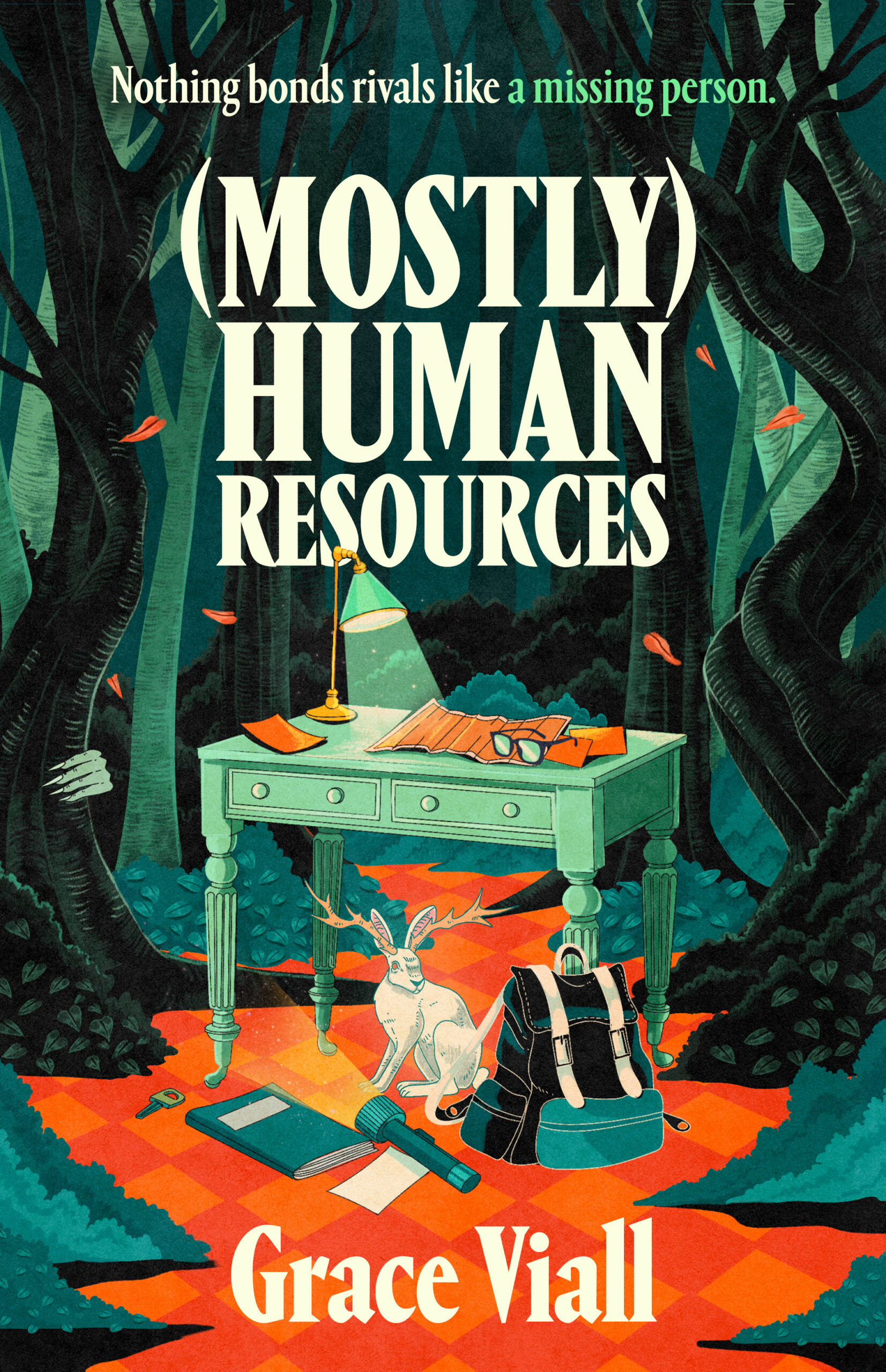
Grace Viall is joining us today to talk about her novel, (Mostly) Human Resources. Here’s the publisher’s description:
Working in human resources was not what Alexys had in mind when she joined Entity, the private company that categorizes and manages the world’s cryptids. But after her dad was killed on the job as a Warden in the Appalachian Mountains, she was filled with noble ideas of carrying on his legacy . . . from the safety of a desk. Alexys dreams of climbing the corporate ladder while managing the Appalachian Wardens and sparring with Nic, the frustrating (and annoyingly attractive) Director of Research and Cataloging.
When one of Alexys’s new Wardens goes missing after inquiring about a mysterious and highly dangerous monster, her chances of promotion disappear along with him. Determined to save her career—and to shield the Warden’s family from the trauma she experienced after losing her father on the job—she marches off into the monster-infested wilderness to find him herself.
Meanwhile, Nic, with ambitions of becoming the youngest Entity employee to discover a new monster, follows Alexys on her hunt. But the work nemeses are about to discover why the Appalachian Mountains are the last place you want to find yourself after dark. Among mountains older than bones, the jackalopes and ghouls are the least of their worries . . .
What’s Grace’s favorite bit?
I went down so many research rabbit holes while writing the first draft of (Mostly) Human Resources. At one point, I ended up watching three hours’ worth of footage on lighting systems in mines and virtual tours of lighting museums just to figure out if my use of torches was accurate (it wasn’t). I’m no stranger to letting the research distract me from the deadline, but my favorite topic to dig into was Appalachian “granny witches”.
To be honest, it didn’t require so much library time as it did time with my family. I grew up with a lineage of farmers and hard workers with great grandparents that settled through Georgia and up into Virginia. My grandmother is one of eight children, so family get-togethers are no small affair, and the highlight of any gathering is storytelling. So much of Appalachian folklore and culture is spread in much the same way: from an elder to a younger, usually over a warm meal and with a wild tale attached.
A granny witch is closer to a midwife than a sorceress and tends to blend their craft with the everyday. They don’t view the things they do as actual witchcraft but rather the logical, practiced answer to life’s problems. It just makes sense to rub a nickel on a wart to make it go away or vinegar on sunburns. They weren’t doctors or nurses – they were someone’s granny, and the things they did were a little magical.
Growing up, I didn’t even realize much of what my great grandmother and various aunts did was considered granny witchery until I started researching for my book. For me, it was normal to sweep the house in spring, always sweeping through the house and out the door to remove anything negative that might be lingering and to make room for the good things to come. Simmer pots were a staple in winter, made to spread the delicious scent of cinnamon and the hope of prosperity throughout the home. These were things passed from mother to daughter and on again, and none of us really stopped to wonder where it all started.
In my Mamaw’s words: This is just how it’s done.
She had an incredible way of knowing things, and that was one of my favorite aspects of the granny witch traditions. There’s a sense of connection to the world around you, a belief that answers are always right there if you know how to ask. Mamaw used to be able to dangle a necklace over a pregnant woman’s belly and tell you the baby’s gender (she was never wrong, thank you). Give her a dousing rod, and she could find water for her garden as easily as she could feel the rain coming. To this day, I can still use her little tricks and tips to know if I need to bring in my boots before a storm, and I guess that does feel a little magical.
Granny witches certainly don’t wave a magic wand or ride a flying broom, but they have a connection to their land and homes that’s unlike anything I’ve seen anywhere else. Almost any granny witch tradition can be tied to the family, the home, or the land it stands on, and while many may not know the name of the things they do, granny witchery lives on in more Appalachian homes than you’d think.
Reading blog posts, journal entries, and sporadic articles online about granny witches felt like a trek down memory lane more than research. It was eye opening to realize how much of my family’s quirks and traditions were rooted in the Appalachian traditions. It’s an incredible melting pot of people and cultures, mixing together the beliefs and practices of travelers and settlers from all over. Opal, a prominent character in (Mostly) Human Resources, is much crankier than my Mamaw was, but she embodies a lot of those characteristics and traditions. Although, she might be a bit more magical than most.
My Mamaw’s Simmer Pot Recipe:
(disclaimer: this was never written down and is always subject to change based on what’s in the cabinet and pantry)
1. Bring the water to a simmer on the stove
2. Add in orange peels, cloves, cinnamon sticks, thyme, rosemary, and whole bay leaves
– amounts are measured by the heart
3. Let simmer on stove during the day – add water as it evaporates and additional ingredients as needed to maintain the smell
LINKS:
BIO:
Having been raised on the edge of the Appalachian Mountains by a pair of bookworms, Grace Viall can usually be found in a randomly selected state park or forest gathering inspiration for her monster-filled fantasy projects. Grace is currently living in Maryland with her husband and two dogs and is an avid reader and book hoarder. She grew up with a family who loved to spin stories around campfires, and that love of storytelling has stayed with her as she pursues her career as an author. Grace’s hope is to give a new life to old stories but with her own special twist.
*Mary Robinette an affiliate of Bookshop.org and will earn a commission if you click through and make a purchase. This does not increase your cost; it simply helps support her work