
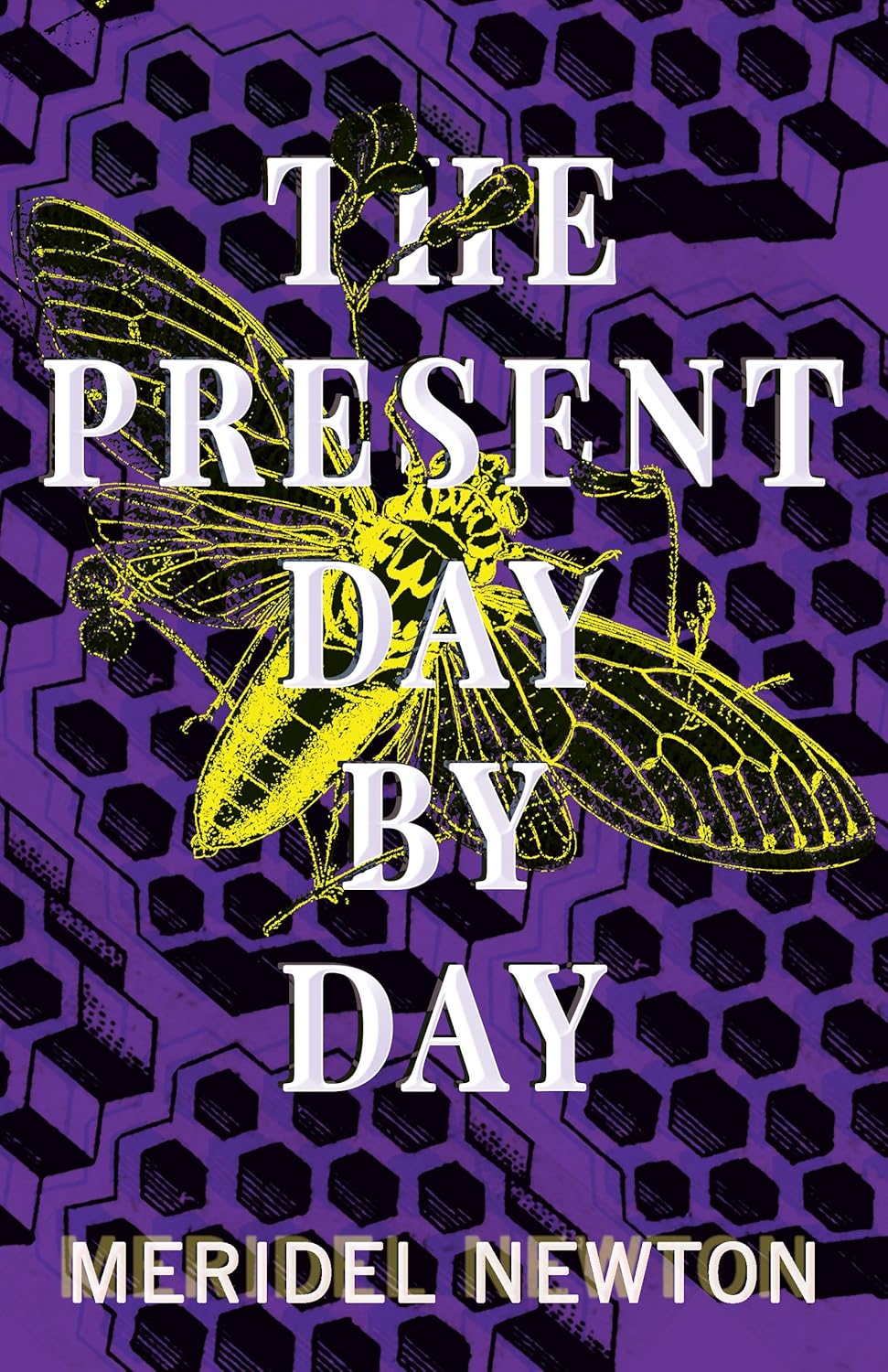
Meridel Newton is joining us today to talk about her novel, The Present Day by Day. Here’s the publisher’s description:
In a world struggling with the aftermath of catastrophe, the small community of Osto is a beacon of hope uniting ragged survivors with a creed of cooperation and equality. As the newly elected leader of the town, Amaya Bly has her hands full after a harder-than-expected winter drained limited resources and strained the population’s tolerance for long, dark days and overcrowded spaces.
The aftermath of a sizable earthquake has her questioning her friendships and loyalties when news of a new nearby settlement reaches the Shelter. Amaya is suddenly faced with the unique dilemmas of leadership: How will Osto approach their new neighbors? What sort of relationship should they—can they—hope to establish? And how can they keep the malcontents within Osto from poisoning the nascent alliance without betraying their ideals?
In this second book of The Shelter Trilogy, a new cast of characters joins old favorites, intrigue threatens all, and bit by bit, humanity continues the recovery!
What’s Meridel’s favorite bit?
The honey is a metaphor.
And it may not even be a particularly complicated metaphor. When it first appeared early on in The Present Day by Day, the second book in the Shelter Trilogy, I had no idea the honey was going to be a particularly important part of the story. All I knew was that in the first chapter, I wanted to present this small group of characters in an idyllic manner, or as close as could be approximated in a post-apocalyptic landscape, and apparently in my head that meant sweetness, and sweetness meant honey. I’ve always been a pantser, as a writer. I’m used to being surprised by the things that I write even as I write them. But even when the beehive appeared, I still had no idea how the honey was going to drip through the entire narrative.
Danica, Lani, and their new baby Chloe are side characters who are also, in a way, the heart of the conflict in The Present Day by Day. The central question of the book, the one that plagues Amaya, the leader of the small community in which they live, focuses squarely on Chloe: What kind of world are they making for those who come next? How do their present choices shape the future society? What will the children think, when they look back on what’s been done?
And so: honey. The sole source of sweetness in a world on the edge. A little treat, a little luxury, the hives lovingly tended by Danica and the harvest prepared and stored by Lani, both eager to share their bounty with the rest of the community. Honey is what Lani serves, on small hard crackers, when she finds herself hosting the leader of her village in her small hut (and Amaya can’t remember the last time she had such sunshine). Honey is what she brings to greet the new neighboring village when they are trying to avoid a war. And here the metaphor starts to come into view, because the neighbors can supply glass jars for storing the honey, and new jams and breads to complement it: clearly, they are stronger together.
But it goes further than that, even! Bees represent a community working together in harmony to ensure success and survival for all, creating bounty through the contributions of every individual. What better metaphor could there be for Osto, the small village struggling to center equity and equality at the end of the world? What better metaphor for anyone trying to believe in the possibility of a brighter future? When we come together, we can make something good. We can make honey. We can have sweetness in our lives once again.
“Can you just imagine growing up never knowing that sugar was a rare thing?” Lani asks her wife.
“It doesn’t have to be,” Danica answers.
She’s right.
LINKS:
BIO:
Meridel Newton lives in Washington, DC and works as a research analyst by day. Her writing appeared in the 1001 Knights and Recognize Fascism anthologies, as well as disparate online magazines and self-published releases. Her work spans many genres, but always reflects her interests in environmental science, social justice, folklore, and human geography. She can be found at www.thepuppetkingdom.com and on Bluesky as @ridelee.bsky.social.
*Mary Robinette an affiliate of Bookshop.org and will earn a commission if you click through and make a purchase. This does not increase your cost; it simply helps support her work