
Zsofia Lazar is joining us today to talk about her novel, Witchsong. Here’s the publisher’s description:
A burning means a heretic. A burning means a witch.
Once, there were many. Now, twenty years after the invasion of the Enhavirrim from the West, the witches of Zöldgömb have fled their peaceful existences, hunted by the Virre church that condemns superstition and magic. They hide in the shadows, their ancient power a threat to those who would see it erased. As the Burnings spread and fear takes root, Rozalin of Enhavirre leaves behind the city of her birth – and the blood-stained past that clings to it. Haunted by visions of witches long dead, she journeys east, where survival is as uncertain as the shifting valleys and suspicious townsfolk. With the reluctant aid of a grim Zöldgömbi Hunter, Rozalin must confront the truth hidden in her dreams and unravel the mystery of her connection to the fabled covens of Zöldgömb. To earn the coven’s trust – and claim a place to call home – Rozalin must complete three legendary tasks. In doing so, however, she will face the undeniable truth: that she cannot hide from the horrors of her heritage, nor from her destiny.
What’s Zsofia’s favorite bit?
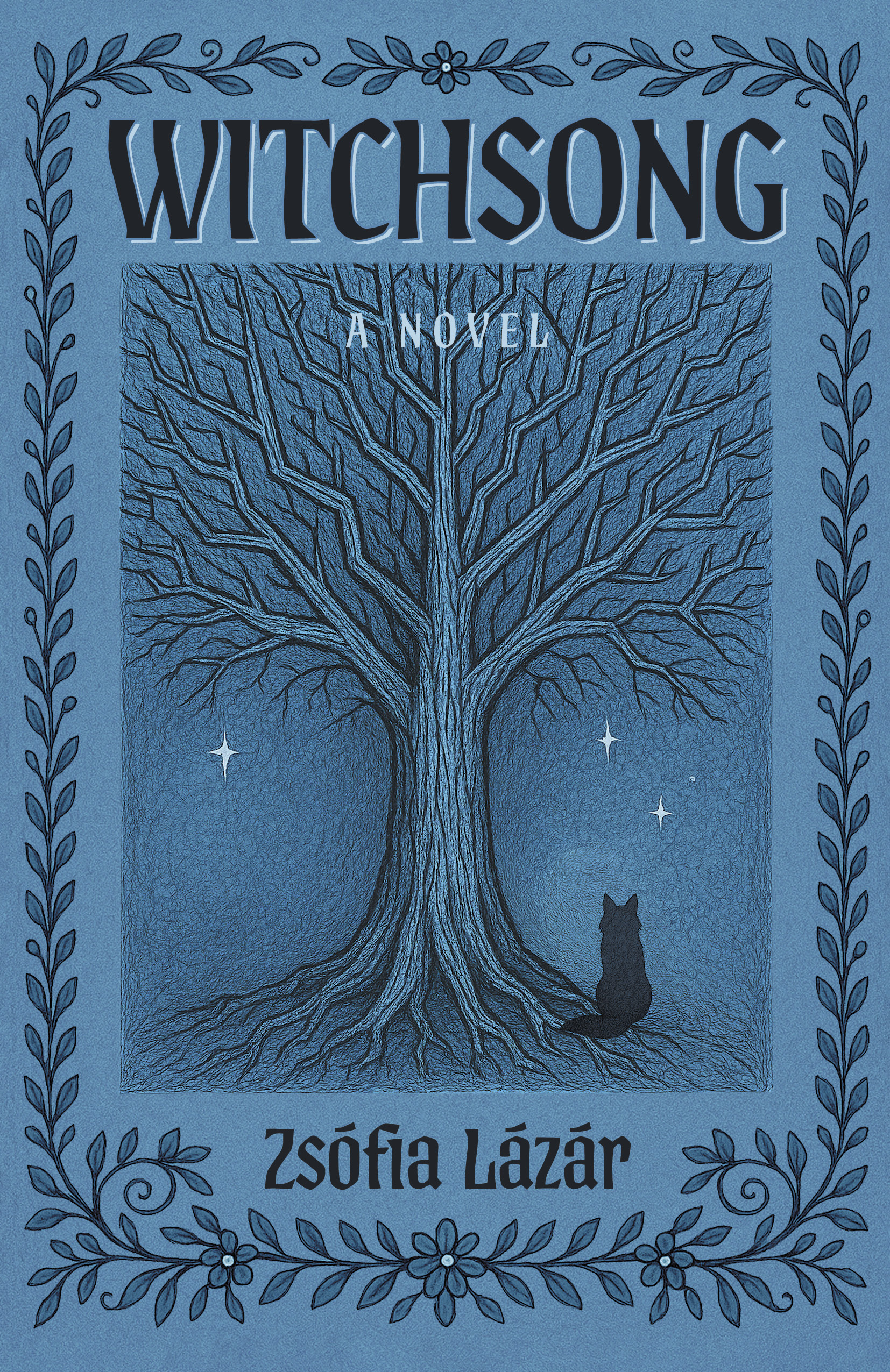
My favourite bit from my book, ‘Witchsong’, might shock some people. It’s not the slow romance
between the Hunter and my protagonist, and it’s not the scene where my protagonist discovers her
own power, although that bit was very cool to write. It is, in fact, something that runs through the
whole of the text: the emphasis on the community of women.
Women have always had experiences that men cannot understand, and so the bonds between us run
deep from the experience of being so profoundly misunderstood by the opposite sex. The witch
trials of history, in some parts, showcase how easy it is for men to accuse and become angry at that
which they do not understand instead of seeking such knowledge and understanding out.
My book, in some ways, is built on the power of community, and the power of female
understanding. It was written at a time when I was profoundly lonely and hurting in my personal
life, and I relied heavily on my female friends to help me through it. So when Rozalin, my
protagonist, meets another woman in my book, it is only right that it completely changes the course
of her story. Instead of remaining passive, she becomes active; she is inspired by the heroism of her
newfound acquaintance into taking control of her own life and destiny, which Ánizs subsequently
helps her to do. She introduces her to the valley of the witches, as well as the Witch Mother of the
Coven, and helps her to temporarily make it her home. She encourages her learning, her magical
training, and secures her the means to prove herself. None of Rozalin’s growth would have been
possible without Ánizs, because women bloom best in the company of others who genuinely want
them to fulfil their potential.
Rozalin isn’t immediately accepted into the community, because she hasn’t proved herself, but there
are a few people who do after seeing how hard she’s trying. And because of their openness, she gets
to undertake the Trials to become a full witch, and to show the rest of them that she can be trusted.
This done at first through the Trial of Faith: to pass, she must show that she has completed faith in
the community, and that she can be trusted to have others put their faith in her as well. Whether this
is navigating a lake blindfolded, scaling a wall or jumping off a waterfall, she must do what she is
asked without question. She struggles with it, initially – she worries about what will happen if the
instructions she is given are incorrect, and whether they are secretly hoping she will fail. But by
believing them, and in the bonds that they have with each other, she does not. Without trust and
understanding, we as a species cannot hope to endure, and I tried to show that it is the same for the
witches in my book. A belief in the goodness of others, in community and love that we feel for our
friends and family, are essential. But it is just as important to believe in the kindness of strangers
and the magic that lingers even now in the world, even if we do not, at first, understand it.
This is further emphasised by the sacred nature of stories in ‘Witchsong’: stories tell us more about
the world, and more about ourselves, than we ever could have learnt without them. And so, every
story in my book, which are inspired by Hungarian folk tales that I grew up with, seeks to imbue
itself with meanings that may look different from one person to the other. But to the community of
women, and witches, they are a way to forge a bridge between their different perspectives, and
come out on the other side, united and whole, a community and family in truth. That, to me, was my
favourite bit of the book to write.
LINKS:
BIO:
Zsofia Lazar is a London-based writer and legal and compliance analyst. A graduate of UCL and holder of an MA in Law, she draws inspiration from modern history and Hungarian folklore. Her writing blends cultural, historical, and fantastical themes influenced by her studies and lifelong love of storytelling.
*Mary Robinette an affiliate of Bookshop.org and will earn a commission if you click through and make a purchase. This does not increase your cost; it simply helps support her work